
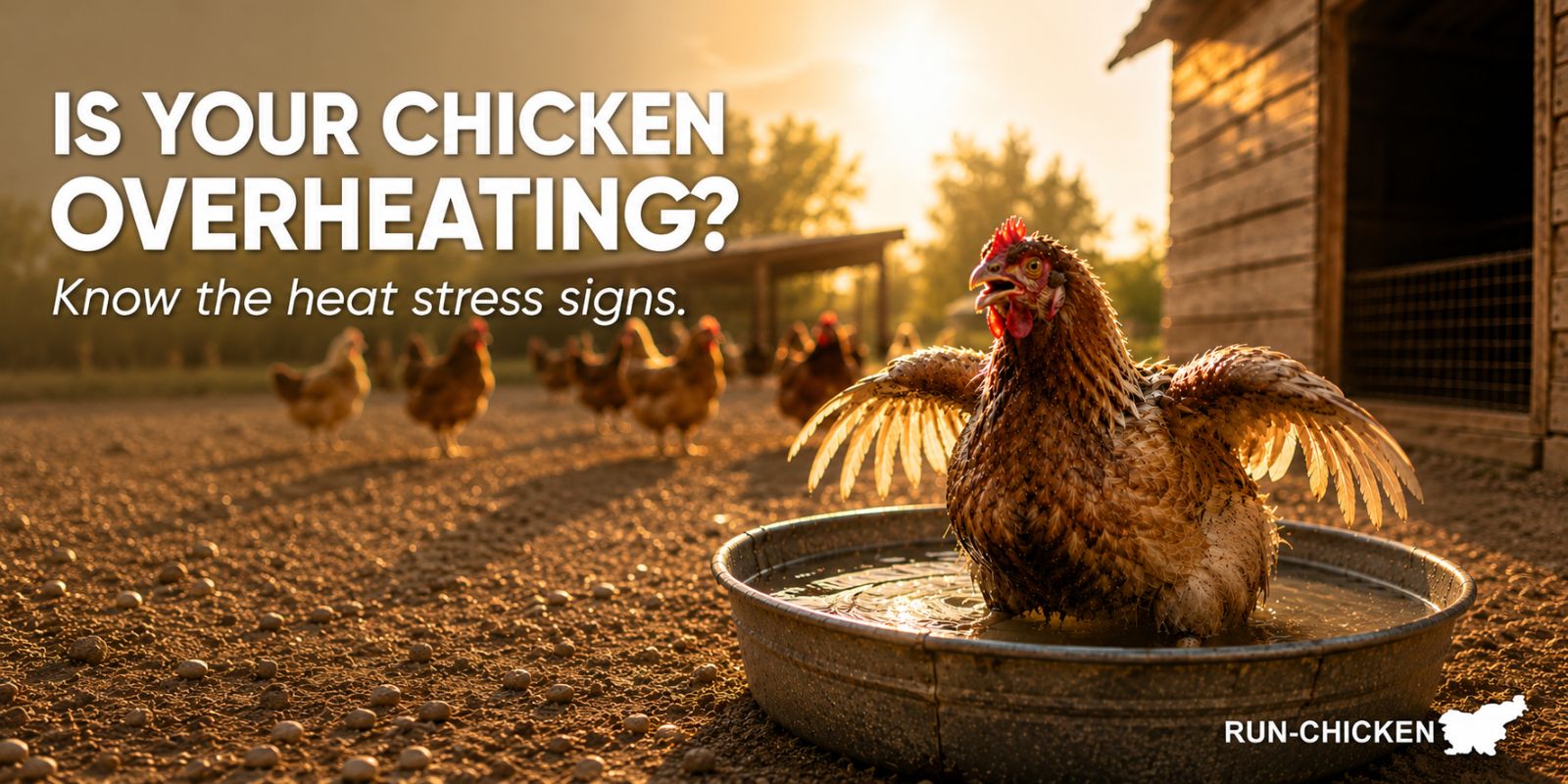
Summer is one of the most challenging seasons for backyard chicken keepers. While chickens tolerate cold surprisingly well, high temperatures can quickly become dangerous, especially during heatwaves.
Unlike humans, chickens cannot sweat. Instead, they regulate their body temperature by panting, spreading their wings away from their bodies, and seeking cool, shaded areas. If they cannot cool themselves fast enough, mild heat stress can quickly progress into a medical emergency.
Here’s how to recognize the warning signs and what you can do to protect your flock.
Why Heat Stress Is Dangerous
Heat stress occurs when a chicken’s body temperature rises faster than it can cool itself.
Several factors increase the risk:
- High temperatures
- High humidity
- Poor ventilation
- Lack of shade
- Dirty or empty water containers
- Overcrowded coops
During severe heatwaves, even healthy birds can struggle if proper precautions aren’t taken.
Early Signs of Heat Stress
Recognizing heat stress early gives you the best chance to prevent serious health problems.
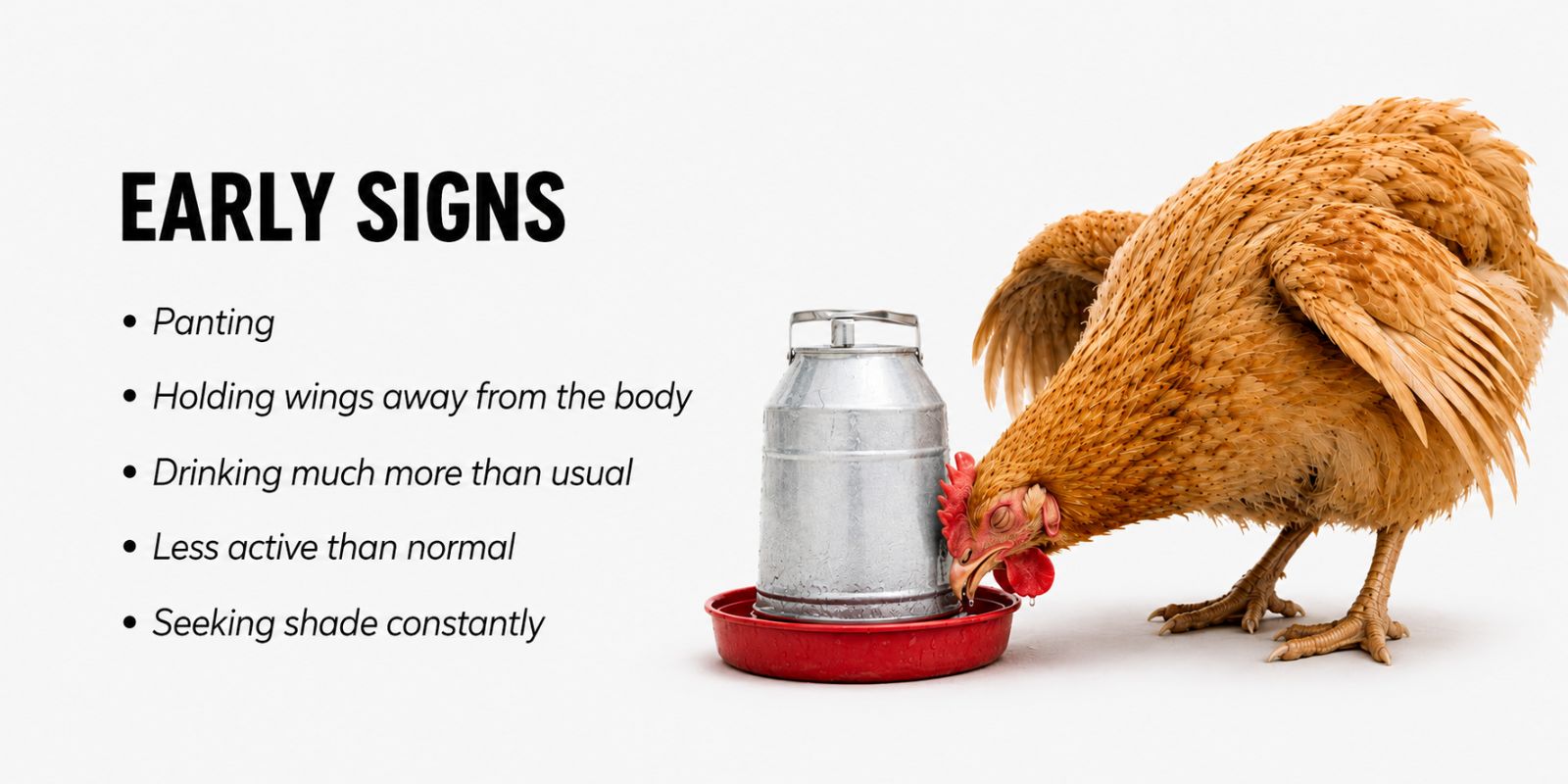
Watch for these signs:
- Heavy panting
- Holding wings away from the body
- Drinking much more water than usual
- Reduced activity
- Constantly seeking shade
These symptoms indicate your chicken is trying to cool itself. At this stage, quick action usually prevents the condition from worsening.
Serious Warning Signs
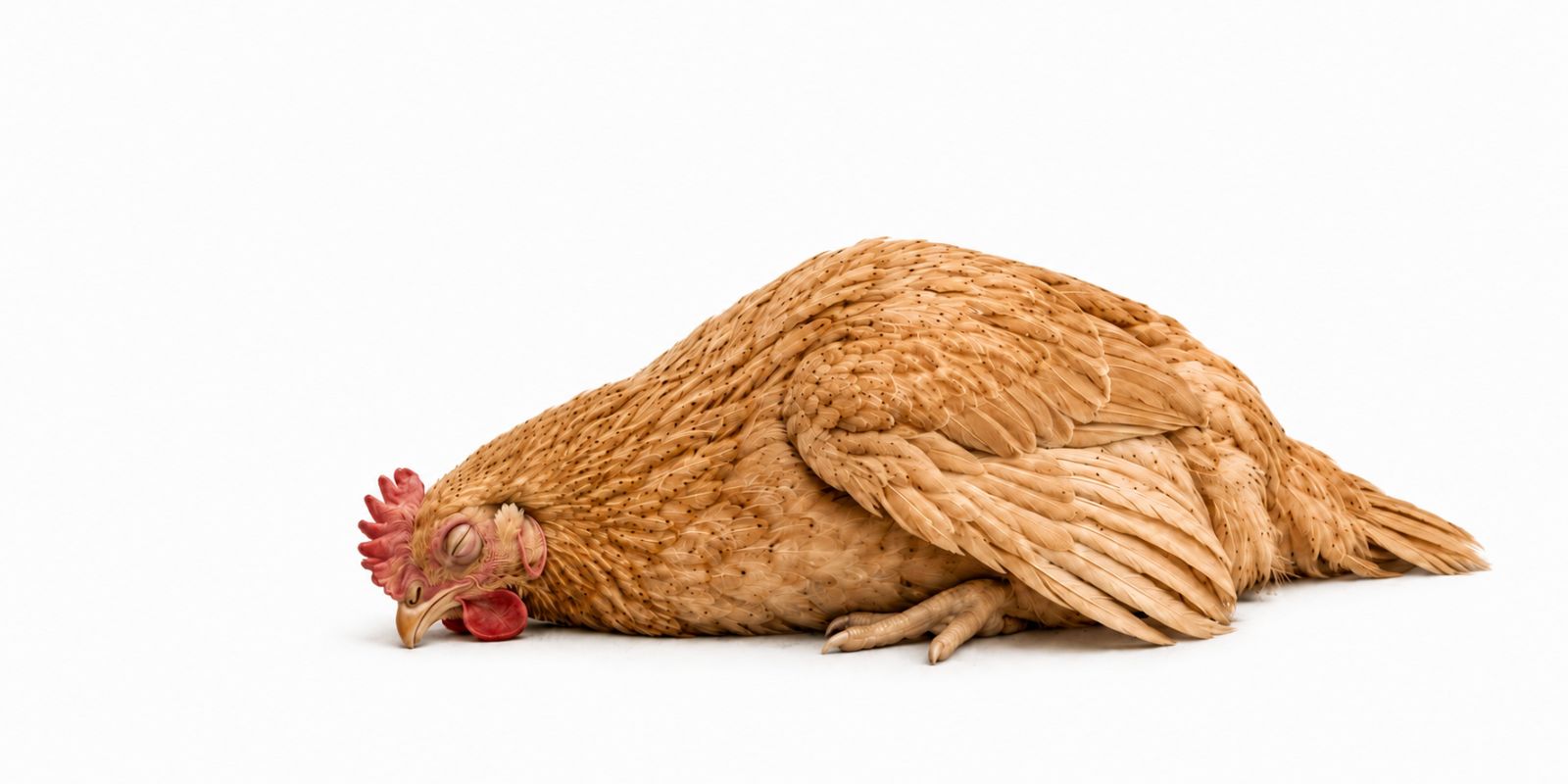
If heat stress progresses, chickens may develop more severe symptoms, including:
- Difficulty standing
- Extreme weakness
- Closed eyes
- Pale comb and wattles
- Collapse
- Seizures
If you notice any of these signs, treat the situation as an emergency immediately.
What To Do Immediately
If a chicken is suffering from heat stress:
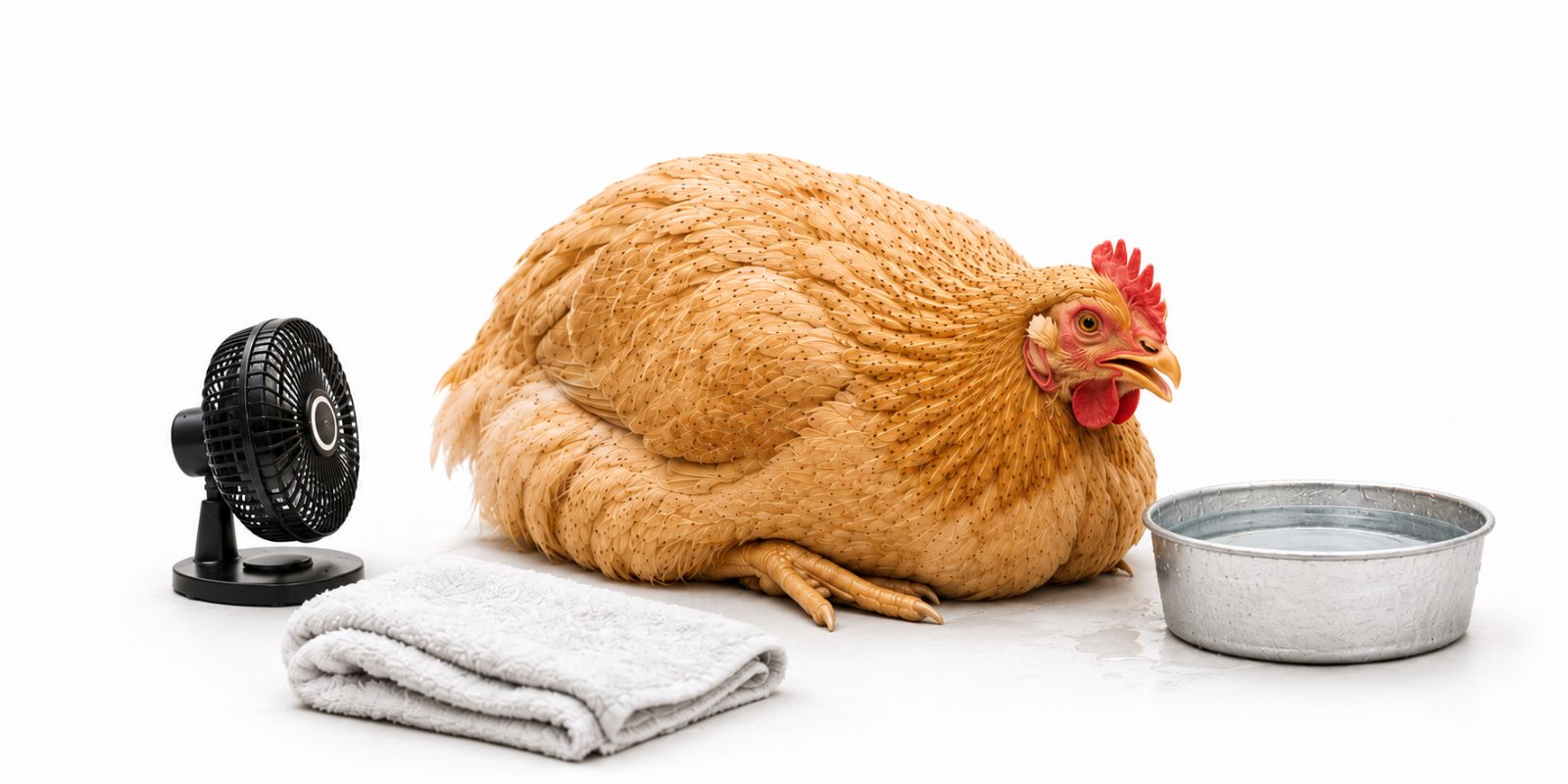
- Move the chicken into a cool, shaded location.
- Offer cool (not ice-cold) fresh water.
- Increase airflow using a fan if available.
- Wet the legs and feet with cool water.
- Apply cool water to the comb and wattles.
- Never immerse the bird in ice water. Rapid cooling can cause shock and make the situation worse.
If your chicken remains unable to stand, continues having seizures, or does not improve after cooling measures, contact an avian veterinarian as soon as possible.
Prevention Is Always Easier Than Treatment
Preventing heat stress is much easier than treating it.
Every hot day, make sure your flock has:
- Fresh, cool water available at all times
- Plenty of shade
- Good airflow and ventilation
- Cooling treats like watermelon or cucumber
- Minimal stress
- Regular observation during the hottest hours
Small daily habits can dramatically reduce the risk of overheating.
Cooling Treat Ideas
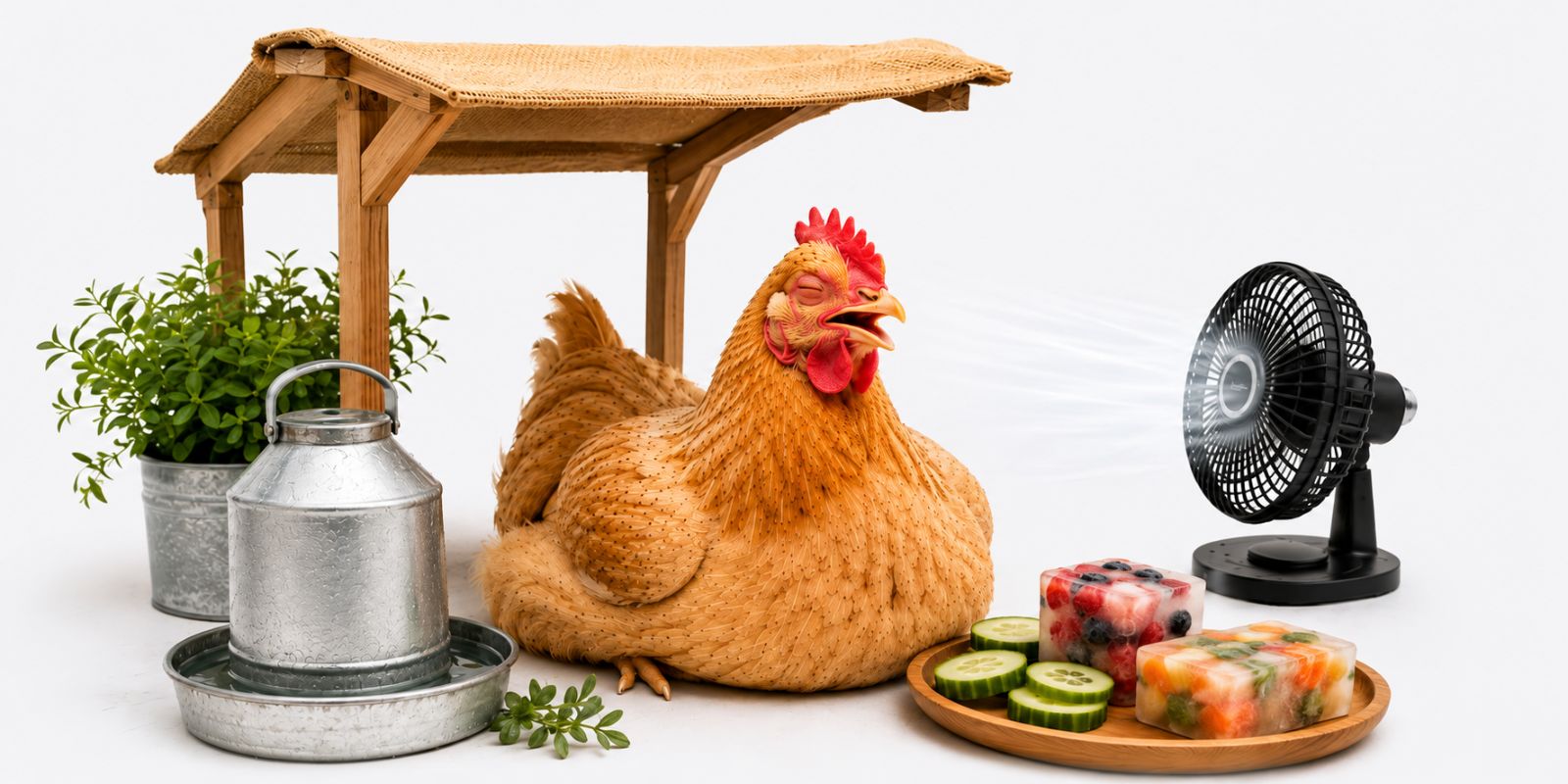
Hydrating snacks help chickens stay cool while encouraging them to eat.
Some excellent choices include:
- Watermelon
- Cucumber
- Frozen peas
- Berries
- Leafy greens
- Frozen vegetable treat blocks
Remember that treats should make up no more than about 10% of your flock’s diet. Their primary nutrition should always come from a balanced layer feed.
Keep Fresh Water Available
Water is your flock’s most important defense against heat.
During hot weather:
- Refill drinkers several times a day.
- Keep water containers in the shade.
- Clean waterers regularly.
- Add extra drinkers for larger flocks.
- Add ice cubes on extremely hot days to keep water cooler for longer.
Keep the Coop Cool
A well-designed coop helps chickens regulate their temperature naturally.
To improve ventilation:
- Open vents safely using predator-proof mesh.
- Remove anything blocking airflow.
- Create cross-ventilation where possible.
- Avoid overcrowding.
If you use fans, ensure chickens cannot access electrical cords.
Don’t Forget Egg Collection
Hot weather also affects eggs.
Collect eggs more frequently to:
- Keep them cleaner.
- Reduce cracking.
- Prevent overheating.
- Discourage egg-eating behavior.
How Run-Chicken Helps During Summer
Summer chicken care isn’t only about providing fresh water and shade, it’s also about giving your flock access to cooler outdoor areas as early as possible.
The Run-Chicken Automatic Coop Door automatically open your coop at sunrise, allowing your chickens to leave the coop before temperatures begin to rise. Early access to fresh air, shade, and water helps reduce heat buildup inside the coop and supports your flock’s comfort throughout the day.
Combined with plenty of fresh water, good ventilation, nutritious feed, and regular flock inspections, the Run-Chicken Automatic Coop Door helps create a safer, more comfortable environment for your chickens during the hottest months of the year.
Final Thoughts
Heat stress can develop faster than many chicken keepers realize. Fortunately, it’s also highly preventable.
By providing:
- plenty of fresh water,
- adequate shade,
- good ventilation,
- healthy cooling treats,
- and regular flock inspections,
you’ll greatly reduce the risk of overheating and help your hens stay healthy, comfortable, and productive all summer long.
After all, a cool flock is a happy flock.
